the weekend at The Hollow
The Hollowthe weekend at The Hollow is not merely a visit to the country but the pressure chamber in which the Angkatell household gathers its difficult relationships. Lucy Angkatell’s anxious preparations reveal that the weekend’s decisive significance lies in its mixture of hospitality and compulsion: people must be brought together, even when their personalities conflict, because social courtesy and existing relationships make separation impossible.
Anticipation and Social Pressure
Lucy Angkatell begins thinking about the weekend through the night and admits to Midge Hardcastle that she has been “dreadfully bothered about it.” Fine weather seems reassuring because bad weather would imprison “discordant personalities” indoors, making every tension worse. The prospect of round games recalls the previous year, when Lucy believes she behaved thoughtlessly toward Gerda Christow. She feels unable simply to exclude Gerda, since inviting John Christow without his wife would be rude, yet she also regards Gerda’s niceness and lack of intelligence as an especially difficult combination. Lucy’s reference to the Law of Compensation turns an awkward social judgment into a half-serious theory of human fairness.
The conversation also shows how Lucy’s mind moves between practical planning and digression. She cannot say exactly what time it is, because she never does, while Midge sternly reminds her that the hour matters. Yet Midge remains the person Lucy trusts to make the gathering manageable: she calls her sensible and practical, and asks her to help think through the guests. The weekend is therefore organized not only by a hostess’s arrangements but by Midge’s compensating pragmatism.
The Guests and Their Obligations
Edward Angkatell’s arrival is singled out as another source of difficulty. When Lucy finally says that Edward is coming, Midge falls silent before responding, indicating that his presence carries an emotional significance beyond ordinary guest-list management. Lucy’s concern is consequently layered: she is not merely arranging rooms, meals, or diversions, but attempting to contain the effects of old attachments and unsettled personalities within a formally agreeable visit.
Midge herself approaches the gathering with a different energy. She tells Henrietta Savernake that she intends to be “gloriously rude to everyone this weekend,” after describing the humiliations of working in a shop and defending domestic service against the idea that shop work is more independent. Her declaration turns the weekend into a temporary suspension of ordinary restraint. At the same time, her confidence depends on Lucy’s kindness; she calls Lucy an angel while preparing to oppose the other guests. The gathering thus offers Midge both refuge and a stage on which accumulated resentment can be expressed.
Gerda Christow at The Hollow
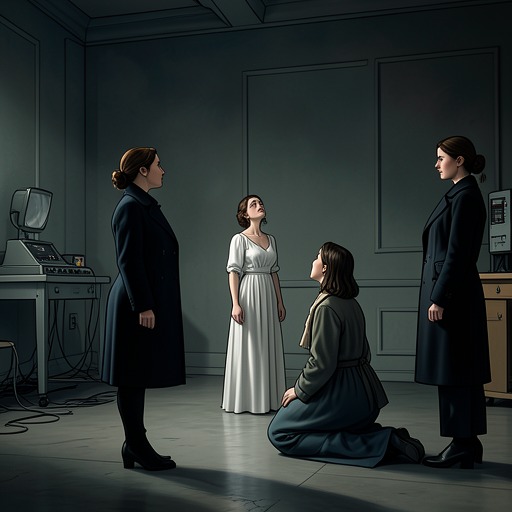
For Gerda Christow, the weekend is anticipated not as recreation but as ordeal. She has dreaded it for a long time, and The Hollow always makes her feel bewildered and forlorn. Lucy’s unfinished sentences, rapid inconsequences, and conspicuous attempts at kindness constitute the form of social behavior Gerda fears most, while the other members of the household are scarcely easier for her to endure. She experiences the visit as two days of martyrdom undertaken for John Christow’s sake.
This private misery contrasts sharply with John’s expectation. On the morning of the gathering, he stretches and expresses unqualified pleasure at going into the country, telling Gerda that the change will do her good. The same weekend therefore exists in two incompatible emotional registers: for John, it promises restoration and ease; for Gerda, it repeats a nightmare of social disorientation. That contrast establishes the gathering’s central instability before any overt crisis occurs.
Rituals, Movement, and the Gathering’s Atmosphere
The weekend’s social program includes tea, walks, and the presentation of the grounds. After tea, John Christow asks Henrietta Savernake to walk with him, while Lucy undertakes to show Gerda the rock garden, despite acknowledging that it is the wrong time of year for it. The gesture is characteristic of the gathering’s etiquette: hospitality persists even when its objects and occasions are imperfect.
The walk also creates a revealing contrast between Henrietta’s experiences of John and Edward. Walking with Edward is imagined as slow, aimless pottering; walking with John requires Henrietta to hurry to keep up, and by the time they reach Shovel Down she is breathless. The weekend’s ordinary activity consequently exposes differences in temperament and attraction. A country walk is not neutral scenery: it becomes a measure of energy, intimacy, and the divergent emotional possibilities represented by the two men.
Narrative Function and Significance
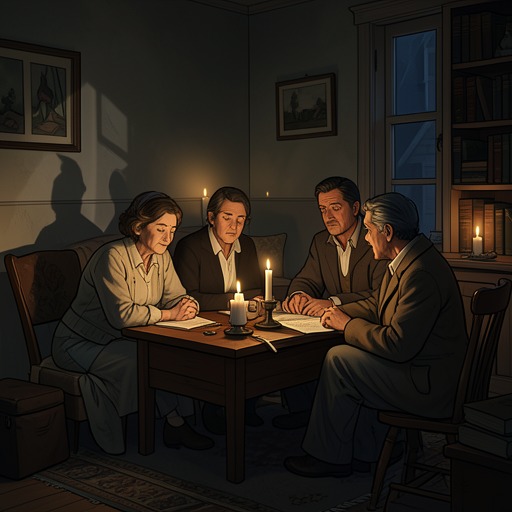
As a time period, the weekend at The Hollow concentrates the novel’s social world into a limited interval and a shared country setting. The gathering is framed by weather, games, tea, gardens, and walks, but each pleasant form is shadowed by prior embarrassment, present obligation, or concealed feeling. Lucy’s preparations show the household attempting to manage human incompatibility through ceremony; Gerda’s dread shows the limits of that attempt; Midge’s rebellious promise shows how the same enclosure can release suppressed anger.
The weekend therefore operates as an enclosed social experiment whose apparent purpose is leisure but whose actual effect is exposure. Guests who might remain separate in ordinary life are placed together, and the smallest arrangements—whether Gerda must attend, who should walk with whom, and how the weather will affect indoor games—carry the weight of larger relationships. Before the gathering has fully unfolded, The Hollow has already become a place where courtesy, resentment, loyalty, and emotional rivalry are forced into the same scene.